


Over the past few years, we have gathered hundreds of industry experts, defeated countless difficulties, and finally formed a complete learning product - DSA-C03 test answers, which are tailor-made for students who want to obtain Snowflake certificates. Our customer service is available 24 hours a day. You can contact us by email or online at any time. In addition, all customer information for purchasing SnowPro Advanced: Data Scientist Certification Exam test torrent will be kept strictly confidential. We will not disclose your privacy to any third party, nor will it be used for profit. Then, we will introduce our products in detail.

Simulate real test environment
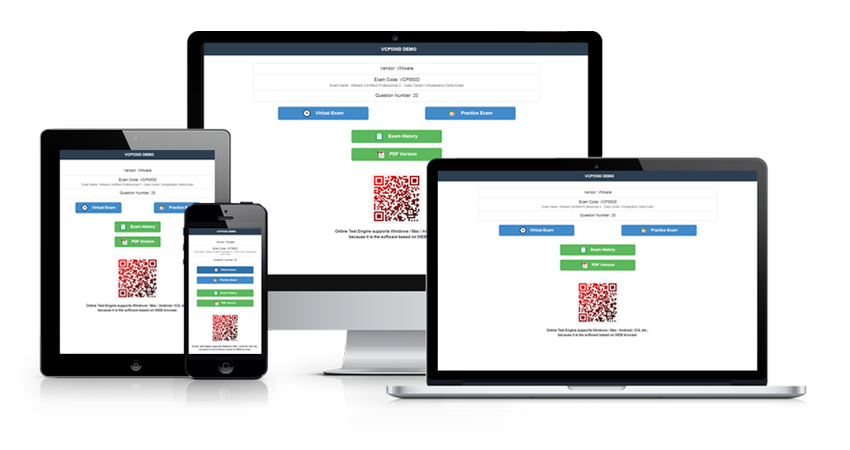
There are three versions of SnowPro Advanced: Data Scientist Certification Exam test torrent—PDF, software on pc, and app online,the most distinctive of which is that you can install DSA-C03 test answers on your computer to simulate the real exam environment, without limiting the number of computers installed. Through a large number of simulation tests, you can rationally arrange your own DSA-C03 exam time, adjust your mentality in the examination room, find your own weak points and carry out targeted exercises. But I am so sorry to say that DSA-C03 test answers can only run on Windows operating systems and our engineers are stepping up to improve this. In fact, many people only spent 20-30 hours practicing our DSA-C03 guide torrent and passed the exam. This sounds incredible, but we did, helping them save a lot of time.
Quality Assurance: 98% to 99% pass rate
On the one hand, SnowPro Advanced: Data Scientist Certification Exam test torrent is revised and updated according to the changes in the syllabus and the latest developments in theory and practice. On the other hand, a simple, easy-to-understand language of DSA-C03 test answers frees any learner from any learning difficulties - whether you are a student or a staff member. These two characteristics determine that almost all of the candidates who use DSA-C03 guide torrent can pass the test at one time. This is not self-determination. According to statistics, by far, our DSA-C03 guide torrent hasachieved a high pass rate of 98% to 99%, which exceeds all others to a considerable extent. At the same time, there are specialized staffs to check whether the SnowPro Advanced: Data Scientist Certification Exam test torrent is updated every day.
Safe and stable service
There are many large and small platforms for selling examination materials in the market, which are dazzling, but most of them cannot guarantee sufficient safety and reliability. Are you worried about the security of your payment while browsing? SnowPro Advanced: Data Scientist Certification Exam test torrent can ensure the security of the purchase process, product download and installation safe and virus-free. If you have any doubt about this, we will provide you professional personnel to remotely guide the installation and use. The buying process of DSA-C03 test answers is very simple, which is a big boon for simple people. After the payment of DSA-C03 guide torrent is successful, you will receive an email from our system within 5-10 minutes; click on the link to login and then you can learn immediately with DSA-C03 guide torrent.
Snowflake SnowPro Advanced: Data Scientist Certification Sample Questions:
1. You are tasked with building a model to predict customer churn. You have a table named in Snowflake with the following relevant columns: 'customer_id', 'login_date', , 'orders_placed', , and 'churned' (binary indicator). You want to engineer features that capture customer engagement over time using Snowpark for Python. Which of the following feature engineering steps, applied sequentially, are MOST effective in creating features indicative of churn risk?
A) 1. Calculate the number of days since the customer's last login, and use nulls instead of negative numbers to indicate inactivity. 2. Calculate the rolling 7-day average of 'orders_placed' using a window function, partitioning by 'customer_id' and ordering by 'login_date'. 3. Calculate the slope of a linear regression of page_views' over time for each customer, indicating the trend in engagement using Snowpark ML. 4. Calculate the percentage of weeks the customer logged in. 5. Create a feature showing standard deviation of page_views per customer over the last 90 days.
B) 1. Calculate the total 'page_views' and 'orders_placed' for each customer without considering time. 2. Use one-hot encoding for the 'subscription_type' column.
C) 1. Calculate the average 'page_views' per week for each customer over the last 3 months using a window function. 2. Calculate the recency of the last order (days since last order) for each customer. 3. Create a feature indicating the change in average daily page views over the last month compared to the previous month. 4. Create a feature showing standard deviation of page_views per customer over the last 90 days.
D) 1. Calculate the maximum 'page_views' in a single day for each customer. 2. Calculate the total number of days with no 'login_date' for each customer. 3. Create a feature indicating if a customer has ever placed an order. 4. Use a simple boolean for the 'subscription_type' column.
E) 1. Calculate the average 'page_views' per day for each customer. 2. Calculate the total number of for each customer. 3. Create a feature indicating whether the customer has a premium subscription ('subscription_type' = 'premium').
2. You are developing a fraud detection model in Snowflake. You've identified that transaction amounts and transaction frequency are key features. You observe that the transaction amounts are heavily right-skewed and the transaction frequencies have outliers. Furthermore, the model needs to be robust against seasonal variations in transaction frequency. Which of the following feature engineering steps, when applied in sequence, would be MOST appropriate to handle these data characteristics effectively?
A) 1. Apply min-max scaling to the transaction amounts. 2. Remove outliers in transaction frequency using the Interquartile Range (IQR) method. 3. Calculate the cumulative sum of transaction frequencies.
B) 1. Apply a logarithmic transformation to the transaction amounts. 2. Apply a Winsorization technique to the transaction frequencies to handle outliers. 3. Calculate a rolling average of transaction frequency over a 7-day window.
C) 1. Apply a square root transformation to the transaction amounts. 2. Standardize the transaction frequencies using Z-score normalization. 3. Create dummy variables for the day of the week.
D) 1. Apply a logarithmic transformation to the transaction amounts. 2. Replace outliers in transaction frequency with the mean value. 3. Create lag features of transaction frequency for the previous 7 days.
E) 1. Apply a Box-Cox transformation to the transaction amounts. 2. Apply a quantile-based transformation (e.g., using NTILE) to the transaction frequencies to map them to a uniform distribution. 3. Calculate the difference between the current transaction frequency and the average transaction frequency for that day of the week over the past year.
3. A data science team is tasked with deploying a pre-built anomaly detection model in Snowflake to identify fraudulent transactions. They need to use Snowflake ML functions and a Snowflake Native App (that houses the model) to achieve this. The Snowflake Native App is installed and available. The transaction data is stored in a table called 'TRANSACTIONS. Which of the following steps are essential to successfully deploy and use this pre-built model within a User Defined Function (UDF) for real-time scoring, assuming the app provides a function named 'ANOMALY SCORE?
A) Create a UDF that calls the 'ANOMALY _ SCORE function provided by the Snowflake Native App, passing the relevant transaction features as arguments.
B) Ensure the 'TRANSACTIONS' table is shared with the Snowflake Native App's container so the model can directly access the data.
C) Grant the USAGE privilege on the Snowflake Native App to the role executing the UDF. This ensures the UDF can access the app's functionality.
D) Create an external function in API Integration instead of UDF.
E) Train the pre-built anomaly detection model using Snowflake's ML functions (e.g., 'CREATE MODELS) with the 'TRANSACTIONS' data before creating the UDE
4. Your team has deployed a machine learning model to Snowflake for predicting customer churn. You need to implement a robust metadata tagging strategy to track model lineage, performance metrics, and usage. Which of the following approaches are the MOST effective for achieving this within Snowflake, ensuring seamless integration with model deployment pipelines and facilitating automated retraining triggers based on data drift?
A) Leveraging a third-party metadata management tool that integrates with Snowflake and provides a centralized repository for model metadata, lineage tracking, and data governance. This tool should support automated tag propagation and data drift monitoring. Use Snowflake external functions to trigger alerts based on metadata changes.
B) Relying solely on manual documentation and spreadsheets to track model metadata, as automated solutions introduce unnecessary complexity and potential errors.
C) Storing model metadata in a separate relational database (e.g., PostgreSQL) and using Snowflake external tables to access the metadata information. Implement custom stored procedures to synchronize metadata between Snowflake and the external database.
D) Utilizing Snowflake's INFORMATION SCHEMA views to extract metadata about tables, views, and stored procedures, and then writing custom SQL scripts to generate reports and track model lineage. Combine this with Snowflake's data masking policies to control access to sensitive metadata.
E) Using Snowflake's built-in tag functionality to tag tables, views, and stored procedures related to the model. Implementing custom Python scripts using Snowflake's Python API (Snowpark) to automatically apply tags during model deployment and retraining based on predefined rules and data quality checks.
5. You are using Snowpark Pandas to prepare data for a machine learning model. You have a Snowpark DataFrame named 'transactions df that contains transaction data, including 'transaction id', 'product id', 'customer id', and 'transaction_amount'. You want to create a new feature that represents the average transaction amount per customer. However, you are concerned about potential skewness in the 'transaction_amount' and want to apply a log transformation to reduce its impact before calculating the average. Which of the following steps using Snowpark Pandas would achieve this transformation and calculation most efficiently within Snowflake?
A) Option D
B) Option E
C) Option C
D) Option A
E) Option B
Solutions:
| Question # 1 Answer: A,C | Question # 2 Answer: E | Question # 3 Answer: A,C | Question # 4 Answer: A,E | Question # 5 Answer: E |


 Bernie
 Antony
  Arnold
 Priscilla
  Ron
Ron  Julie
Julie  Modesty
 Nick
Nick  Lisa
Lisa  Ryan
Ryan  Curitis
  Allen
Allen  Heloise
  Victoria
  Christopher
  Helen
Helen  Bella
Bella  Xanthe
  Rosalind


