


Safe and stable service
There are many large and small platforms for selling examination materials in the market, which are dazzling, but most of them cannot guarantee sufficient safety and reliability. Are you worried about the security of your payment while browsing? Palo Alto Networks Security Operations Generalist test torrent can ensure the security of the purchase process, product download and installation safe and virus-free. If you have any doubt about this, we will provide you professional personnel to remotely guide the installation and use. The buying process of SecOps-Generalist test answers is very simple, which is a big boon for simple people. After the payment of SecOps-Generalist guide torrent is successful, you will receive an email from our system within 5-10 minutes; click on the link to login and then you can learn immediately with SecOps-Generalist guide torrent.
Over the past few years, we have gathered hundreds of industry experts, defeated countless difficulties, and finally formed a complete learning product - SecOps-Generalist test answers, which are tailor-made for students who want to obtain Palo Alto Networks certificates. Our customer service is available 24 hours a day. You can contact us by email or online at any time. In addition, all customer information for purchasing Palo Alto Networks Security Operations Generalist test torrent will be kept strictly confidential. We will not disclose your privacy to any third party, nor will it be used for profit. Then, we will introduce our products in detail.

Simulate real test environment
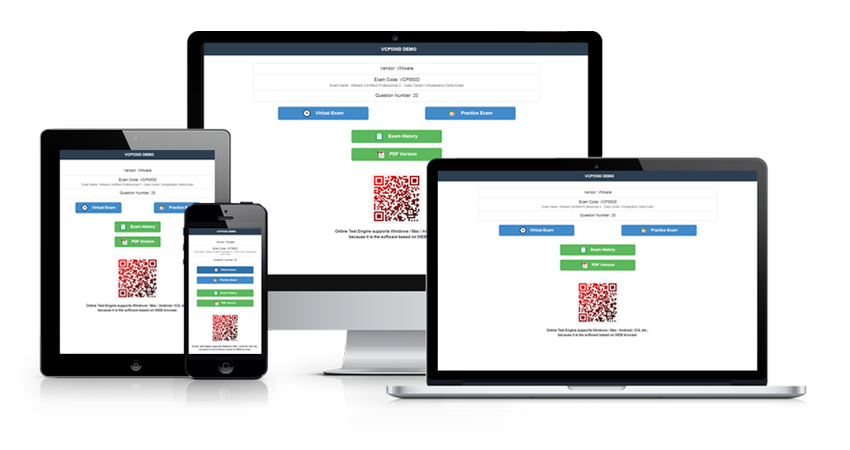
There are three versions of Palo Alto Networks Security Operations Generalist test torrent—PDF, software on pc, and app online,the most distinctive of which is that you can install SecOps-Generalist test answers on your computer to simulate the real exam environment, without limiting the number of computers installed. Through a large number of simulation tests, you can rationally arrange your own SecOps-Generalist exam time, adjust your mentality in the examination room, find your own weak points and carry out targeted exercises. But I am so sorry to say that SecOps-Generalist test answers can only run on Windows operating systems and our engineers are stepping up to improve this. In fact, many people only spent 20-30 hours practicing our SecOps-Generalist guide torrent and passed the exam. This sounds incredible, but we did, helping them save a lot of time.
Quality Assurance: 98% to 99% pass rate
On the one hand, Palo Alto Networks Security Operations Generalist test torrent is revised and updated according to the changes in the syllabus and the latest developments in theory and practice. On the other hand, a simple, easy-to-understand language of SecOps-Generalist test answers frees any learner from any learning difficulties - whether you are a student or a staff member. These two characteristics determine that almost all of the candidates who use SecOps-Generalist guide torrent can pass the test at one time. This is not self-determination. According to statistics, by far, our SecOps-Generalist guide torrent hasachieved a high pass rate of 98% to 99%, which exceeds all others to a considerable extent. At the same time, there are specialized staffs to check whether the Palo Alto Networks Security Operations Generalist test torrent is updated every day.
Palo Alto Networks SecOps-Generalist Exam Syllabus Topics:
| Section | Weight | Objectives |
|---|---|---|
| Topic 1: Security Operations Fundamentals | 25% | - AI and machine learning in security operations - Log management, data ingestion, and retention - Reporting, dashboards, and analytics - SOC roles, responsibilities, and workflows - Compliance frameworks and data protection |
| Topic 2: Cortex XSIAM | 18% | - Automation, playbooks, and response actions - Alert triage, investigation, and threat detection - Compliance, reporting, and operational visibility - Data ingestion, normalization, and correlation - Content packs, rules, and analytics models |
| Topic 3: Cortex XSOAR | 18% | - Playbooks, automation, and orchestration workflows - Platform architecture and core components - Threat intelligence management and enrichment - Integrations, content packs, and customization - Case management and incident lifecycle automation |
| Topic 4: Cortex XDR | 23% | - Deployment, sensors, and data collection - Incident investigation, response, and remediation - Integration with third-party tools and threat feeds - Log stitching, causality analysis, and visibility - Detection rules, behavioral analytics, and alerts |
| Topic 5: Threat Intelligence and Incident Response | 16% | - Threat intelligence sources: WildFire, Unit 42, open feeds - Indicator types: IP, domain, URL, file hash, behavioral - Incident categorization, prioritization, and handling - Threat hunting and false positive/negative analysis - NIST incident response lifecycle and processes |
Palo Alto Networks Security Operations Generalist Sample Questions:
1. In a Palo Alto Networks Strata NGFW or Prisma Access environment, traffic is processed through either the 'slow path' or the 'fast path'. Which of the following conditions or processing stages most accurately describes an action or requirement that forces the initial packet of a new session into the slow path?
A) The packet requires basic routing lookups and interface forwarding.
B) The packet is the first packet of a flow and requires App-ID identification and security policy lookup to build a session.
C) The packet is part of an established TCP session that has already been identified and allowed.
D) The packet is being forwarded based on an existing hardware-accelerated session lookup.
E) The packet is dropped due to a security policy deny rule after inspection.
2. Which of the following statements accurately describes the relationship between Cloud-Delivered Security Services (CDSS) and Security Profiles on Palo Alto Networks NGFWs and Prisma SASE?
A) Security Profiles are only used for basic Layer 4 filtering (port/protocol), while CDSS provide advanced inspection.
B) CDSS are entirely separate cloud services that operate independently of the security profiles configured on the firewall/Prisma Access.
C) CDSS are physical or virtual appliances deployed alongside the firewall to perform security inspection.
D) Security Profiles are configuration objects on the firewall/Prisma Access where administrators define the desired security actions, and these profiles leverage the intelligence and capabilities provided by the CDSS subscriptions.
E) CDSS subscriptions automatically apply security actions globally without requiring Security Policy or profile configuration.
3. Consider the following snippet of a Palo Alto Networks Decryption policy rule:
What is the primary function of the 'profile "default-decryption-profile"' within this Decryption policy rule configuration?
A) It determines which Security Profiles (Threat Prevention, URL Filtering, etc.) will be applied to the traffic after it has been successfully decrypted.
B) It specifies actions to take when the firewall encounters issues during the decryption process, such as unsupported versions, cipher suites, or certificate errors.
C) It defines which certificate (Forward Trust or Forward Untrust) the firewall will use to re-sign server certificates during the SSL Fomard Proxy process.
D) It lists specific URLs or URL Categories that should be excluded from decryption based on compliance or privacy requirements.
E) It dictates the SSL/TLS versions and cipher suites that the firewall will negotiate with both the client and the server during the decryption process.
4. A company is deploying a new internal application that uses a standard web server (HTTPS on port 443) but needs specific security policy enforcement (different from general web browsing) and precise visibility into its usage. App-ID currently identifies this traffic as 'web-browsing'. How can an administrator configure the Palo Alto Networks NGFW (Strata/Prisma SASE) to identify this internal application separately and enable granular policy control?
A) Create a custom Service object for port 443 and use it in the Security policy rule instead of the default 'service-https'.
B) Use a URL Filtering profile to categorize the internal application's URL and apply policy based on that category.
C) Define a custom App-ID signature based on unique characteristics of the application's traffic (e.g., specific HTTP headers, URL patterns), and use this custom App-ID in Security Policy rules.
D) Enable SSL Inbound Inspection for the internal application server and rely on Content-ID to differentiate the traffic.
E) Modify the default 'web-browsing' App-ID signature to exclude traffic to the internal application's IP address.
5. A network administrator notices high CPU utilization and lower than expected throughput on a Palo Alto Networks NGFW during peak hours, despite the total bandwidth usage being well within the hardware capabilities. Reviewing system metrics shows a significant number of new sessions being established per second compared to the overall Mbps throughput. Which configuration or traffic pattern is MOST likely contributing to excessive slow path processing and causing the performance bottleneck?
A) Extensive use of Security policies with source/destination NAT configured, primarily for outbound internet traffic.
B) A large volume of long-lived, established HTTP sessions with basic Threat Prevention profiles enabled.
C) A sudden surge in traffic consisting of many short-lived connections to unique destination IPs/ports, potentially using varied applications or protocols.
D) Security policies allowing inter-zone traffic with no security profiles applied.
E) Heavy traffic consisting mainly of UDP-based video streaming using an established, identified App-I
Solutions:
| Question # 1 Answer: B | Question # 2 Answer: D | Question # 3 Answer: B | Question # 4 Answer: C | Question # 5 Answer: C |


 Jared
Jared 
 Maximilian
  Troy
Troy 
 Will
Will  Morton
  Norton
  Kama
Kama  Hobart
  Stanford
  Xaviera
 Rosalind
  Odelia
  Matt
Matt  Bernard
  Norton
  Lilith


