


Safe and stable service
There are many large and small platforms for selling examination materials in the market, which are dazzling, but most of them cannot guarantee sufficient safety and reliability. Are you worried about the security of your payment while browsing? Certified Public Accountant (Financial Accounting & Reporting) test torrent can ensure the security of the purchase process, product download and installation safe and virus-free. If you have any doubt about this, we will provide you professional personnel to remotely guide the installation and use. The buying process of Financial-Accounting-Reporting test answers is very simple, which is a big boon for simple people. After the payment of Financial-Accounting-Reporting guide torrent is successful, you will receive an email from our system within 5-10 minutes; click on the link to login and then you can learn immediately with Financial-Accounting-Reporting guide torrent.
Quality Assurance: 98% to 99% pass rate
On the one hand, Certified Public Accountant (Financial Accounting & Reporting) test torrent is revised and updated according to the changes in the syllabus and the latest developments in theory and practice. On the other hand, a simple, easy-to-understand language of Financial-Accounting-Reporting test answers frees any learner from any learning difficulties - whether you are a student or a staff member. These two characteristics determine that almost all of the candidates who use Financial-Accounting-Reporting guide torrent can pass the test at one time. This is not self-determination. According to statistics, by far, our Financial-Accounting-Reporting guide torrent hasachieved a high pass rate of 98% to 99%, which exceeds all others to a considerable extent. At the same time, there are specialized staffs to check whether the Certified Public Accountant (Financial Accounting & Reporting) test torrent is updated every day.
Over the past few years, we have gathered hundreds of industry experts, defeated countless difficulties, and finally formed a complete learning product - Financial-Accounting-Reporting test answers, which are tailor-made for students who want to obtain Admission Test certificates. Our customer service is available 24 hours a day. You can contact us by email or online at any time. In addition, all customer information for purchasing Certified Public Accountant (Financial Accounting & Reporting) test torrent will be kept strictly confidential. We will not disclose your privacy to any third party, nor will it be used for profit. Then, we will introduce our products in detail.

Simulate real test environment
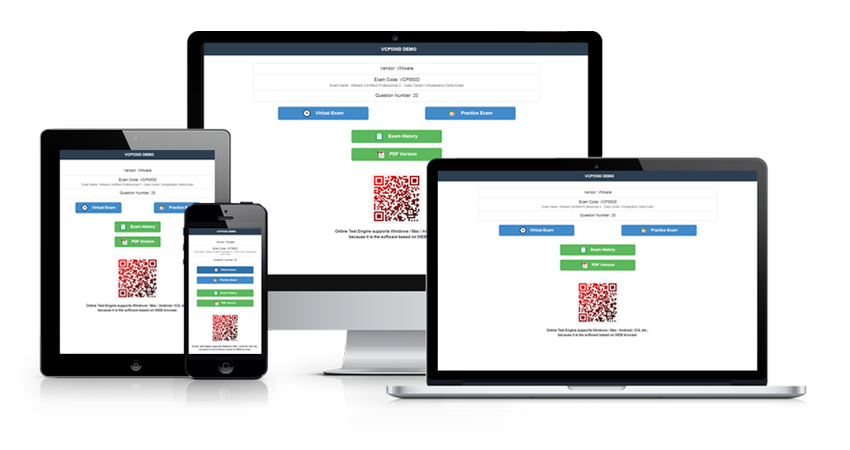
There are three versions of Certified Public Accountant (Financial Accounting & Reporting) test torrent—PDF, software on pc, and app online,the most distinctive of which is that you can install Financial-Accounting-Reporting test answers on your computer to simulate the real exam environment, without limiting the number of computers installed. Through a large number of simulation tests, you can rationally arrange your own Financial-Accounting-Reporting exam time, adjust your mentality in the examination room, find your own weak points and carry out targeted exercises. But I am so sorry to say that Financial-Accounting-Reporting test answers can only run on Windows operating systems and our engineers are stepping up to improve this. In fact, many people only spent 20-30 hours practicing our Financial-Accounting-Reporting guide torrent and passed the exam. This sounds incredible, but we did, helping them save a lot of time.
Admission Test Financial-Accounting-Reporting Exam Syllabus Topics:
| Section | Objectives |
|---|---|
| Topic 1: Conceptual Framework and Financial Reporting | - FASB conceptual framework - Financial statement presentation - Disclosure requirements |
| Topic 2: Assets and Liabilities Accounting | - Leases (ASC 842) - Cash, receivables, and inventory - Liabilities and contingencies - Fixed assets and intangible assets |
| Topic 3: Specialized Accounting Topics | - Foreign currency transactions - Pensions and post-employment benefits - Accounting changes and error corrections |
| Topic 4: Equity, Investments, and Business Combinations | - Stockholders' equity - Business combinations and consolidations - Bonds and debt instruments |
| Topic 5: Governmental and Not-for-Profit Accounting | - Not-for-profit financial reporting - Governmental fund accounting |
| Topic 6: Financial Statements and Transactions | - Income statement and comprehensive income - Revenue recognition (ASC 606) - Balance sheet and statement of cash flows |
Admission Test Certified Public Accountant (Financial Accounting & Reporting) Sample Questions:
1. Lore Co. changed from the cash basis of accounting to the accrual basis of accounting during 1994. The cumulative effect of this change should be reported in Lore's 1994 financial statements as a:
A) Component of income before extraordinary item.
B) Component of income after extraordinary item.
C) Prior period adjustment resulting from the correction of an error.
D) Prior period adjustment resulting from the change in accounting principle.
2. On January 2, 1993, Quo, Inc. hired Reed to be its controller. During the year, Reed, working closely with Quo's president and outside accountants, made changes in accounting policies, corrected several errors dating from 1992 and before, and instituted new accounting policies.
Quo's 1993 financial statements will be presented in comparative form with its 1992 financial statements.
This question represents one of Quo's transactions. List B represents the general accounting treatment required for these transactions. These treatments are:
* Cumulative effect approach - Include the cumulative effect of the adjustment resulting from the accounting change or error correction in the 1993 financial statements, and do not restate the 1992 financial statements.
* Retroactive or retrospective restatement approach - Restate the 1992 financial statements and adjust 1992 beginning retained earnings if the error or change affects a period prior to 1992.
* Prospective approach - Report 1993 and future financial statements on the new basis but do not restate 1992 financial statements.
Item to Be Answered
Quo changed from FIFO to average cost to account for its raw materials and work in process inventories.
List B (Select one)
A) Retroactive or retrospective restatement approach.
B) Prospective approach.
C) Cumulative effect approach.
3. On January 2, 1993, Quo, Inc. hired Reed to be its controller. During the year, Reed, working closely with Quo's president and outside accountants, made changes in accounting policies, corrected several errors dating from 1992 and before, and instituted new accounting policies.
Quo's 1993 financial statements will be presented in comparative form with its 1992 financial statements.
This question represents one of Quo's transactions. List B represents the general accounting treatment required for these transactions. These treatments are:
* Cumulative effect approach - Include the cumulative effect of the adjustment resulting from the accounting change or error correction in the 1993 financial statements, and do not restate the 1992 financial statements.
* Retroactive or retrospective restatement approach - Restate the 1992 financial statements and adjust 1992 beginning retained earnings if the error or change affects a period prior to 1992.
* Prospective approach - Report 1993 and future financial statements on the new basis but do not restate 1992 financial statements.
Item to Be Answered
During 1993, Quo determined that an insurance premium paid and entirely expensed in 1992 was for the period January 1, 1992, through January 1, 1994.
List B (Select one)
A) Retroactive or retrospective restatement approach.
B) Prospective approach.
C) Cumulative effect approach.
4. If a company is not presenting comparative financial statements, the correction of an error in the financial statements of a prior period should be reported, net of applicable income taxes, in the current:
A) Income statement after income from continuing operations and after extraordinary items.
B) Retained earnings statement after net income but before dividends.
C) Income statement after income from continuing operations and before extraordinary items.
D) Retained earnings statement as an adjustment of the opening balance.
5. Brock Corp. reports operating expenses in two categories: (1) selling and (2) general and administrative.
The adjusted trial balance at December 31, 1989 included the following expense and loss accounts:
One-half of the rented premises is occupied by the sales department. Brock's total selling expenses for 1989 are:
A) $480,000
B) $400,000
C) $360,000
D) $370,000
Solutions:
| Question # 1 Answer: C | Question # 2 Answer: A | Question # 3 Answer: A | Question # 4 Answer: D | Question # 5 Answer: A |


 Nick
Nick 
 Hedy
Hedy 
 Nathan
 Boris
Boris  Bert
Bert  Dawn
Dawn  Barlow
  Mignon
  Eli
Eli  Heather
  Aubrey
  Hale
Hale  Jared
Jared  Ulysses
  Betty
Betty  Jeremy
  Myron
Myron  Darlene
  Mona
Mona  Booth
Booth  Martha


